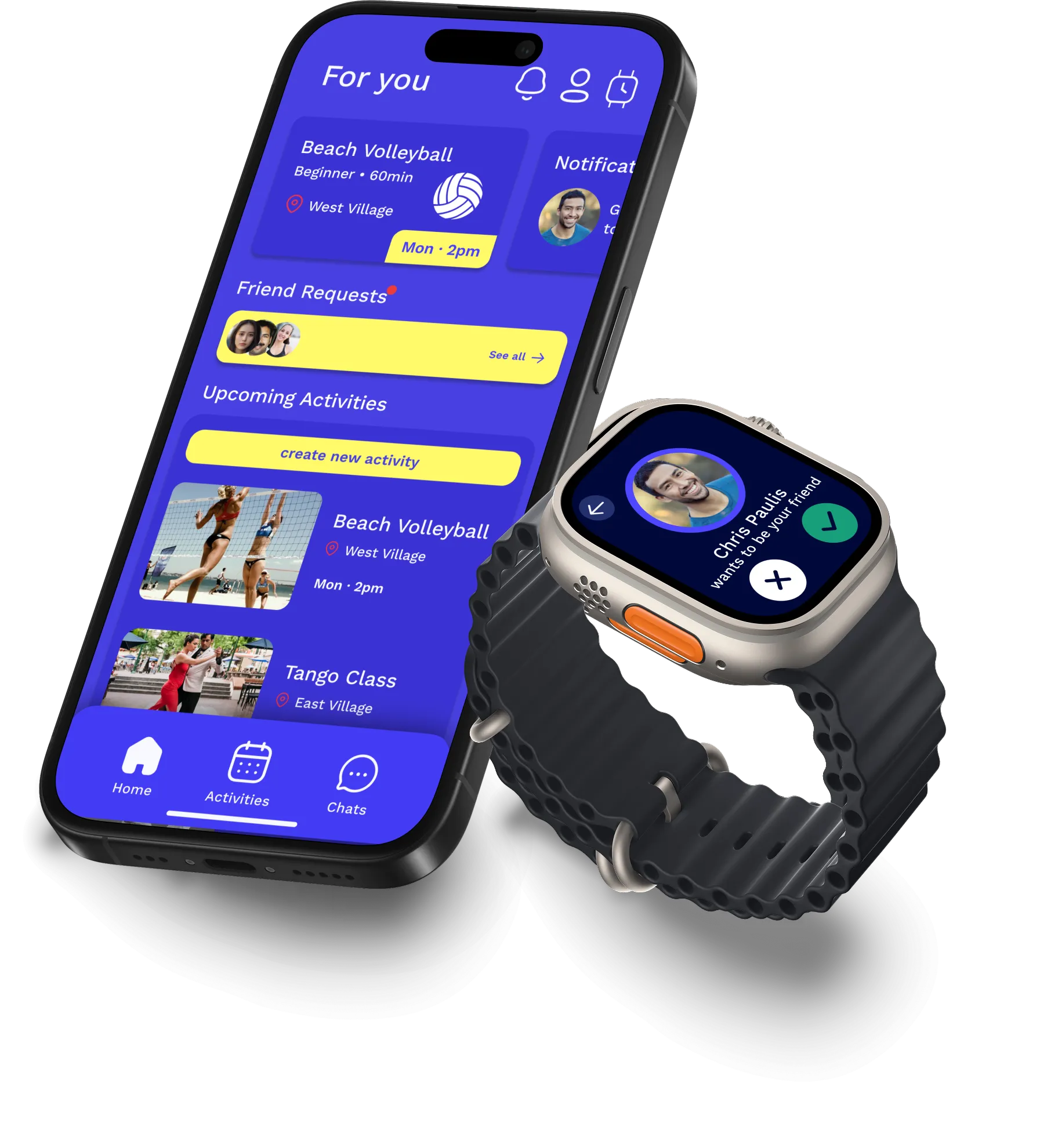
Build something that doesn't already exist for athletes.
Olympic athletes spend years moving between cultures — training camps, athlete villages, qualifying tours. The brief, set inside Design Computing at the University of Sydney, was open: design a digital product that supports the relationships between athletes in a way existing tools don’t.
We were a team of three with thirteen weeks. Every decision after the brief was tested against that one constraint.
The product had to assume rivalry was a feature, not a bug.
Three forces working against connection.
Most contact happens without translation.
Formal events are interpreted; the casual contact between athletes — dining halls, warm-ups, shared rooms — is not. Bee et al. (2019) point to this informal layer as where friendships actually form, and where language gaps quietly close them down.
Subtle mismatches do more damage than open hostility.
Norms around eye contact, personal space, and humour differ widely between sporting cultures. A 2024 paper in Frontiers in Psychology found these small mismatches end conversations more often than any active conflict between athletes.
The competitive stance follows athletes off the court.
Athletes are trained to read competitors as threats. Berendt et al. (2016) describe how this posture — useful in performance — persists into the spaces where the Olympics is supposed to celebrate cultural exchange.
Three methods. One problem statement.
We triangulated to keep one stream from biasing the rest. Surveys gave us scale, interviews gave us texture, ethnography gave us what athletes said when no researcher was in the room.
”There was always some sort of language barrier in terms of whether the ball was in or out. Communicating was definitely sometimes a little shaky.”
Interview · Tennis”I mostly saw them as competitors. I didn’t go beyond the usual small talk unless I knew them personally beforehand.”
Interview · Football”For us to be at two different ends of the spectrum and still come together and be great mates is something I’ll cherish for the rest of my life.”
Interview · 15+ years competingThe Olympics creates a competitive environment where sportsmanship and unity between athletes are undermined. There are fewer opportunities for cultural exchange and athletes are less likely to share mutual respect — a fragmented atmosphere that diminishes the Olympic experience itself.
From three streams of data to one person.
Affinity diagramming surfaced one user we kept returning to. Every product decision after this point was tested against him.
Alex
Olympic tennis player · 27
”I won’t let them win.”
- About
- Highly competitive and driven by rivalry. Reads every opponent as a threat — a posture that doesn’t switch off when he leaves the court.
- Frustrations
- Isolated in athlete villages. Struggles with team dynamics, resents collaboration, and finds language gaps end most casual conversations early.
A day in Alex's life.
We mapped Alex’s experience across one tournament day. The emotional arc told us where Ollie could intervene — and where it shouldn’t try.
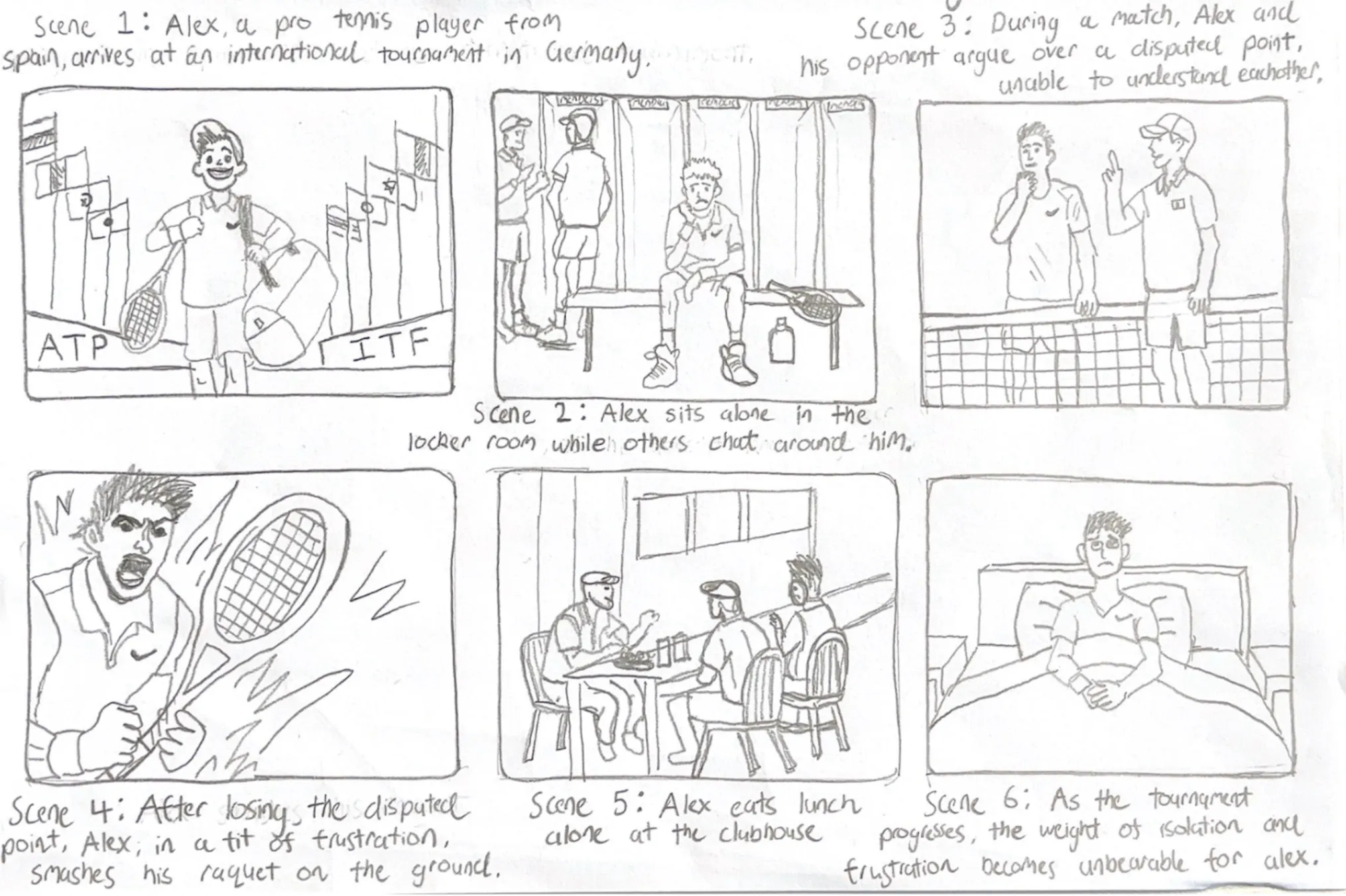
Alex’s day, mapped across five stages.
Arrival
Alex arrives at the tournament village.
Organise low-stakes activities for new arrivals — a structured way in before the competing starts.
Before the match
Sits alone in the locker room.
Make low-effort presence visible — let other athletes know he’s around without forcing conversation.
Match
Umpire rules against Alex’s ball. He believes it was in.
Miscommunication causing tension and disputes on the court.
Outburst
Smashes his racket. Gets a penalty for unsportsmanlike behaviour.
Emotional and mental strain compounded by language barriers — no easy way to explain himself afterwards.
Aftermath
Returns to the hotel. Unable to sleep.
Offer ambient connection in the moments where reaching out feels too heavy — a tap, not a conversation.
The two opportunities at the ends of the arc — arrival and aftermath — gave us the phone’s purpose. The middle three made the case for the watch.
A paired product — phone for depth, watch for presence.
Most social products narrow expression to a single mode. We widened it on purpose.
Where connection gets committed to.
Activity browsing, group chats with built-in translation, profile depth. The phone is where athletes commit to seeing each other again — the surface for the longer contact.
Where presence is enough.
Instant friend requests when two athletes tap watches, low-effort replies, a single-tap response that says I saw you without expecting one back. For the moments athletes are too tired or too focused to type.
How we got here —SCAMPER on the top two ideas from our concept matrix, combining a watch-first omni-channel concept with the structured social features of a mobile-first one.
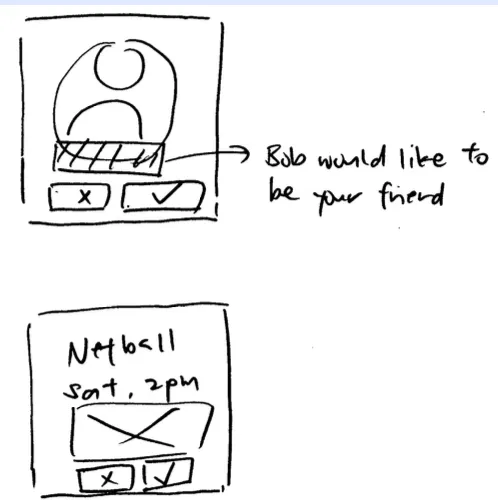
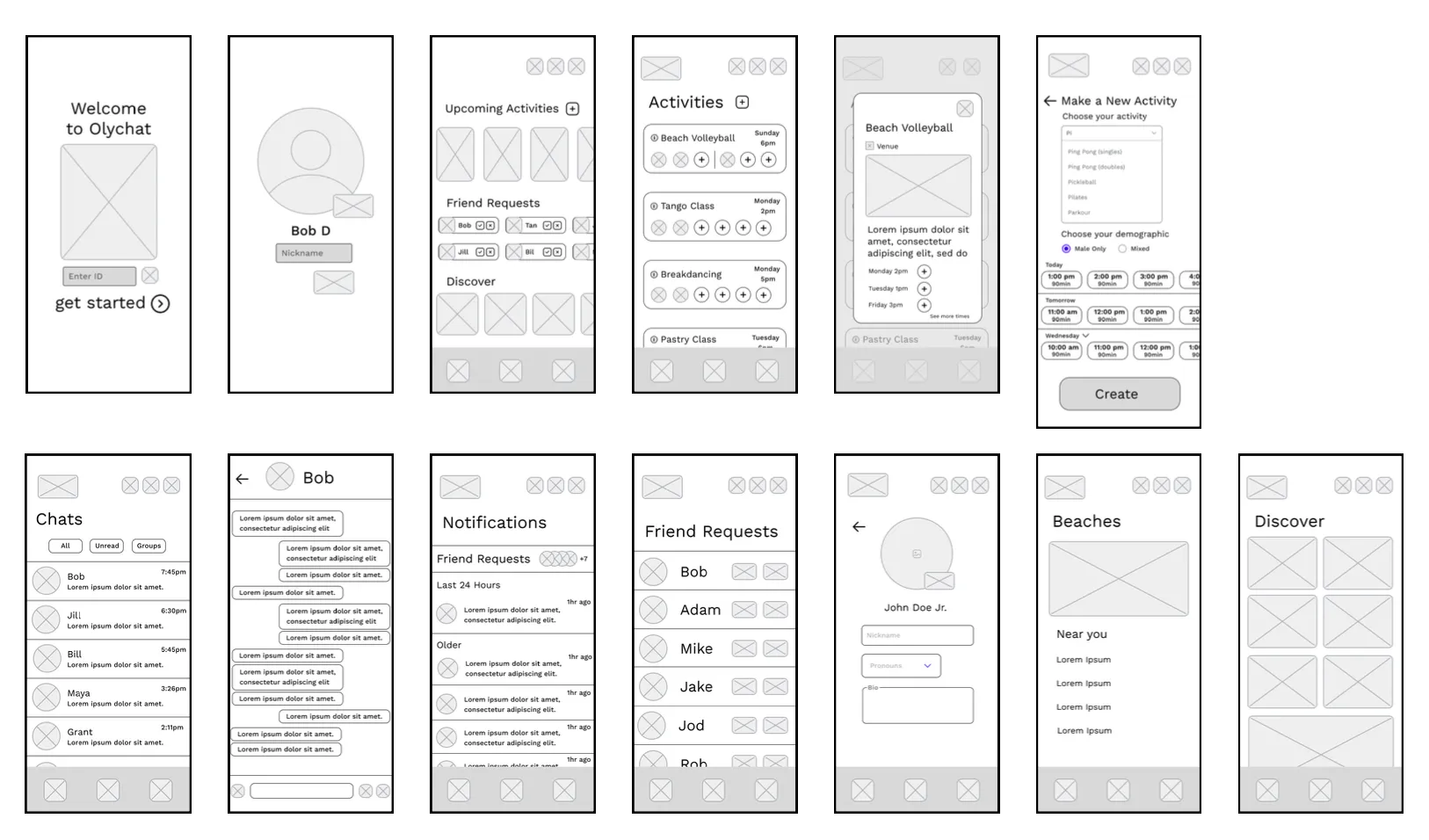
From sketch to screen.
Three rounds of fidelity, each one closer to the final product. Each round was tested before we committed to the next.
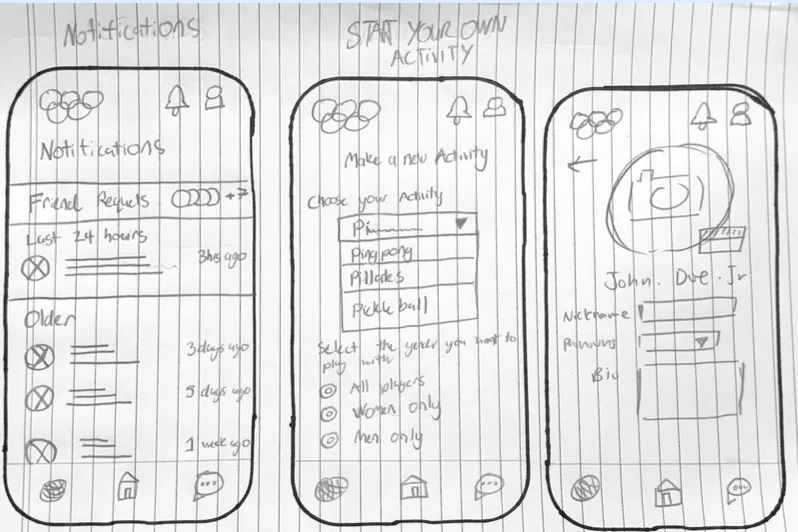
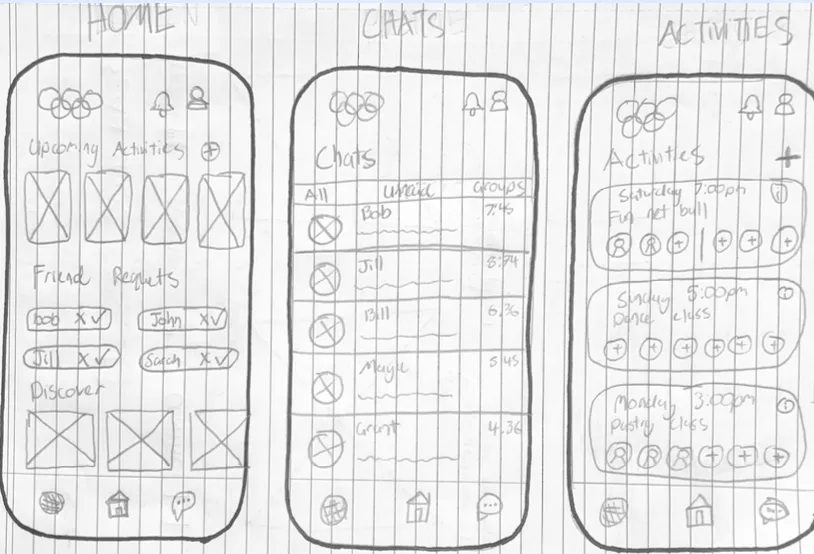
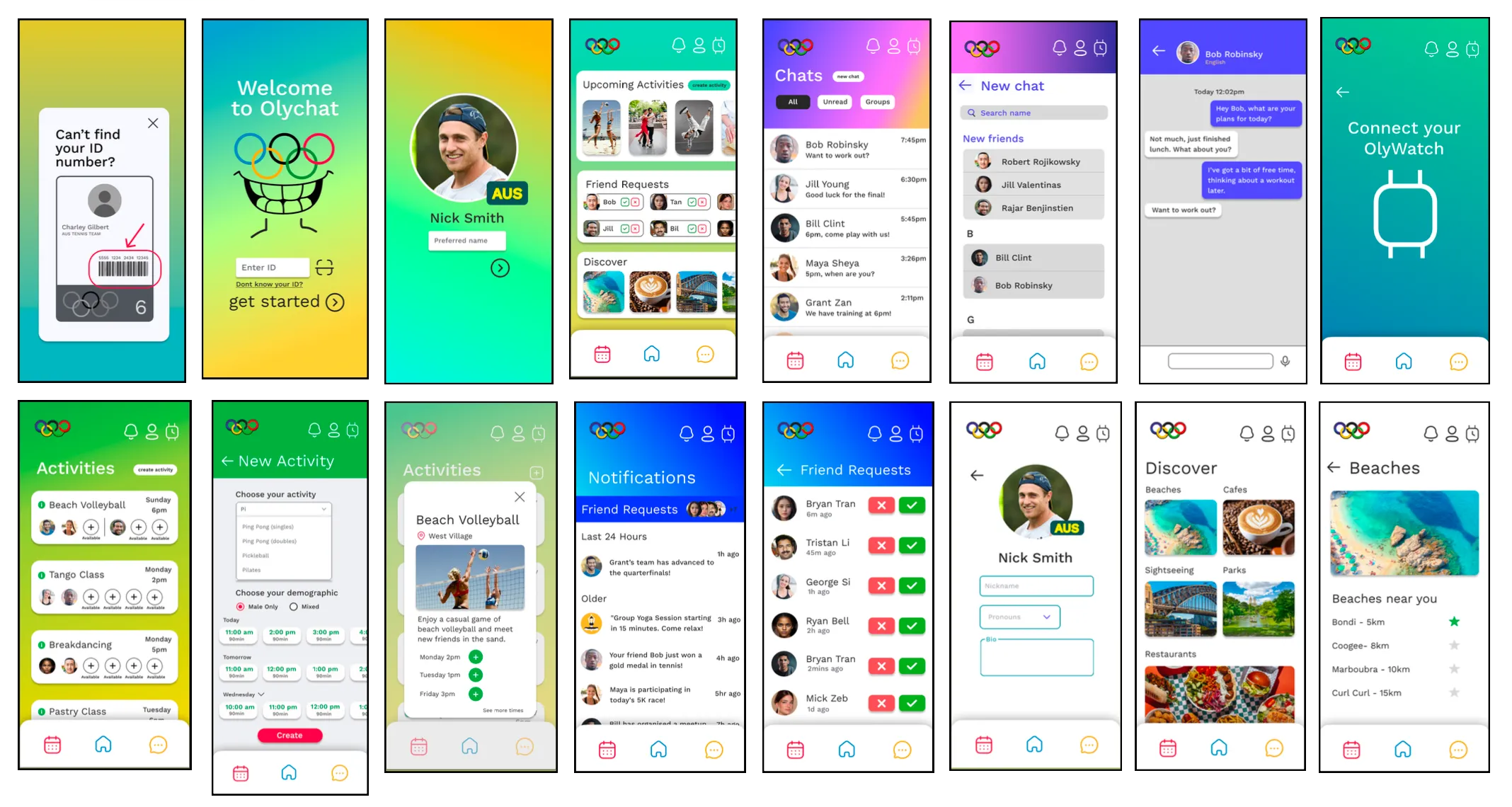
Where connection gets committed to.
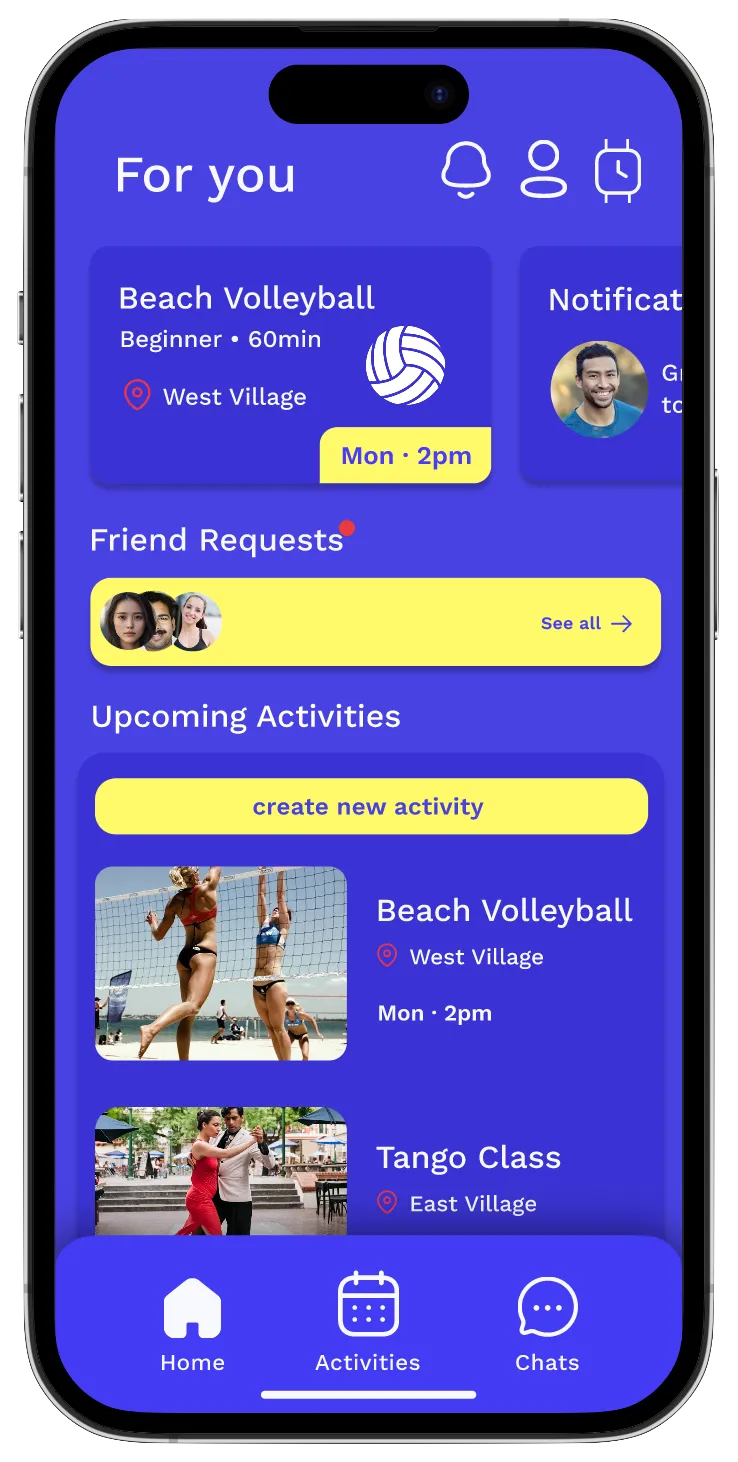
Home
The home screen inverts how social feeds usually rank attention — no broadcasts, no follower counts. The feed surfaces activities the athlete has already joined and friend requests waiting for action.
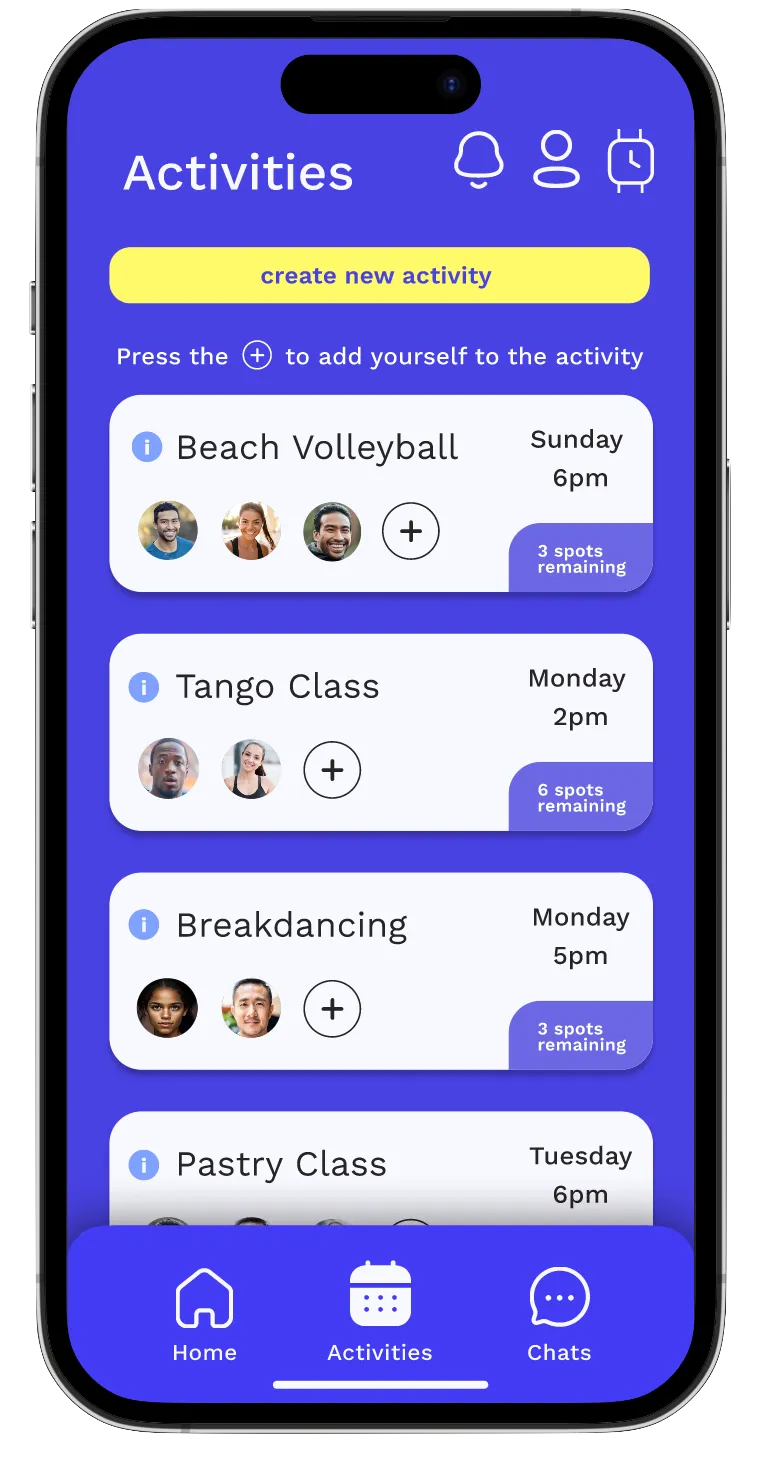
Activities
Athletes create or join low-stakes events with one tap. Sport is optional — the tested list included a pastry class and a tango class alongside the volleyball.
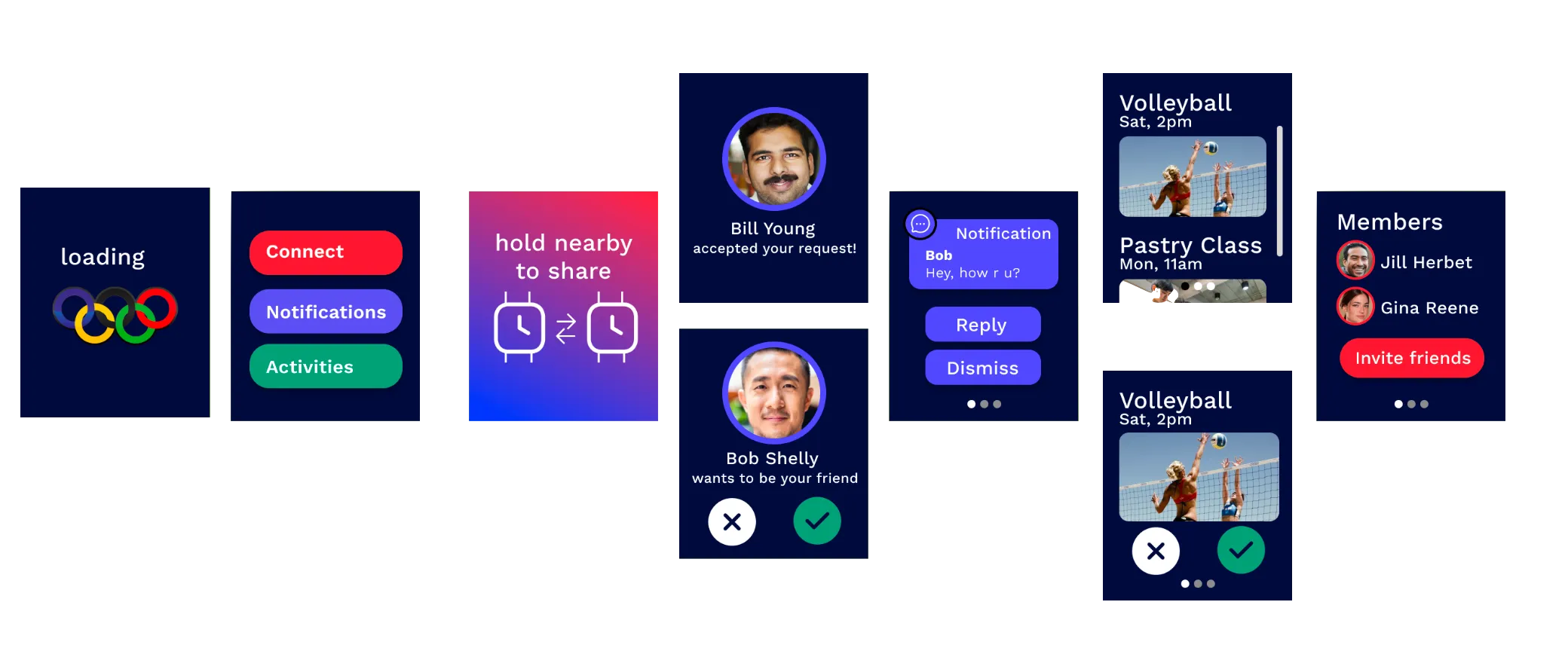
Where presence is enough.
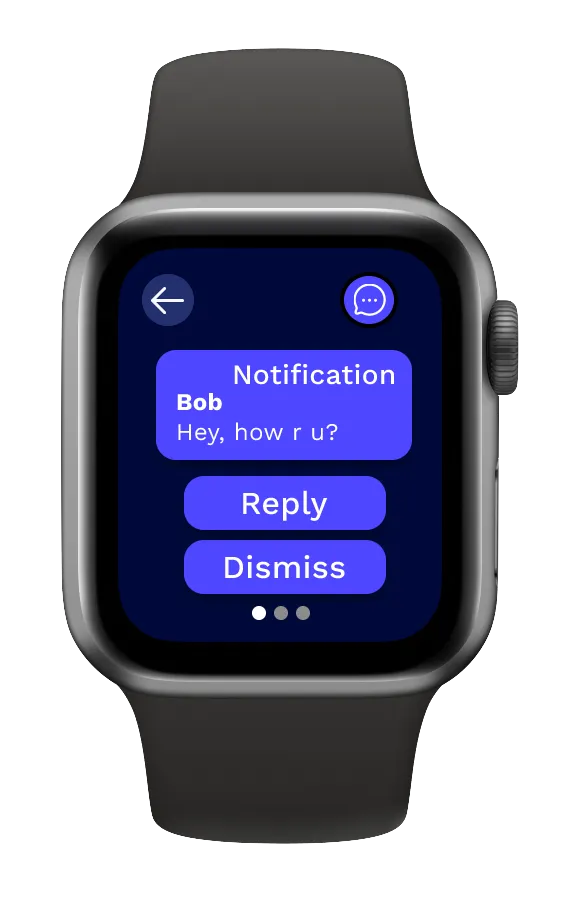
Three flows, no more. The watch never tries to be the phone — only the interactions that genuinely belong on a wrist.
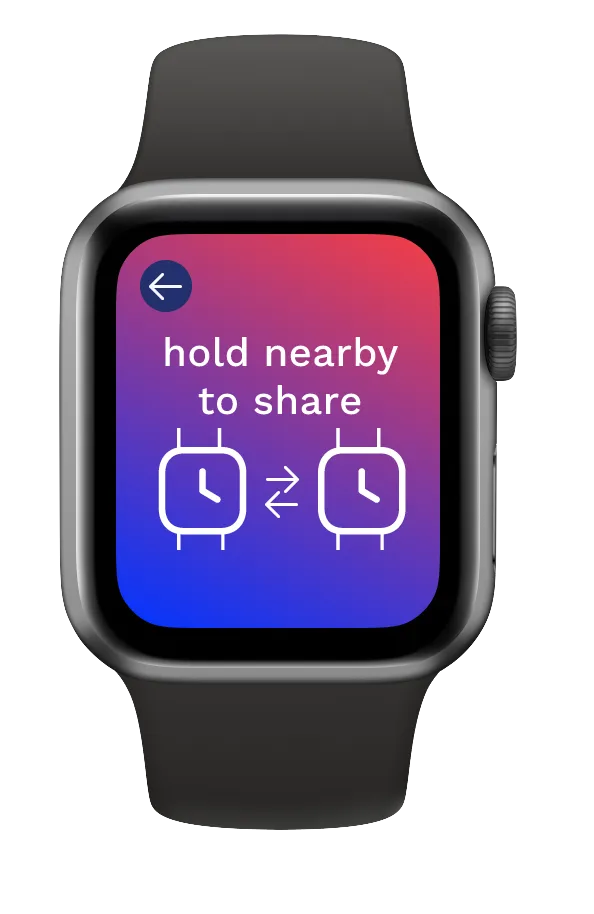
Hold nearby
Two athletes tap watches and exchange contact details — no usernames, no QR codes, no typing.
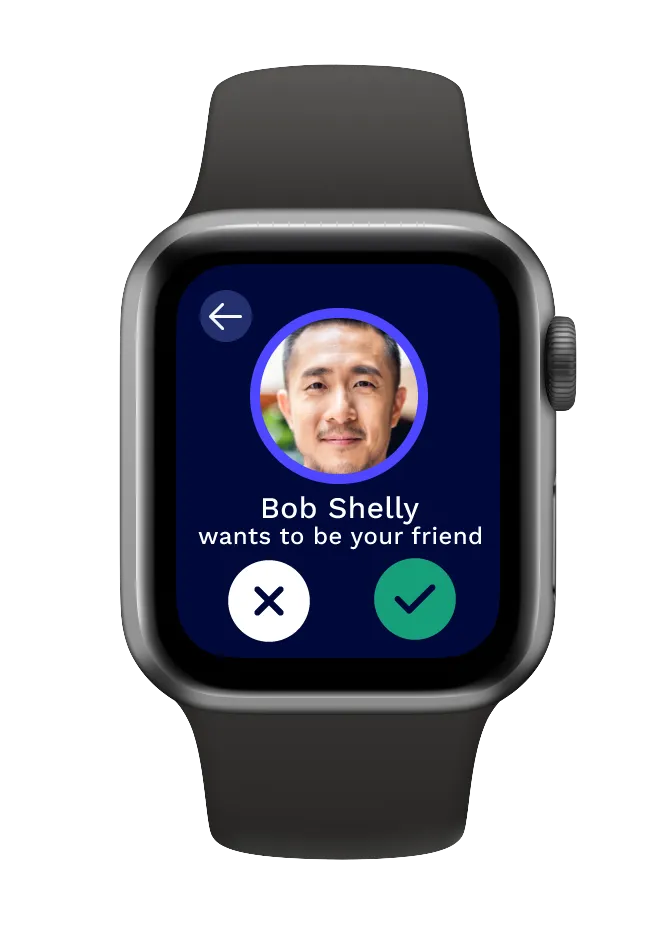
Friend request
Confirmed on the wrist, while both athletes are still in the same room — closing the loop in seconds.
Quick reply
One-tap responses keep short exchanges on the wrist. Anything longer kicks the conversation back to the phone.
Four rounds of users. SUS climbed each pass.
Four rounds across the build: paper, mid-fi, and two passes on the interactive high-fidelity prototype. Each used Think Aloud, a SUS survey, and a freestyle interview, with a heuristic evaluation before the user rounds began.
The biggest gain came between Hi-fi 1 and Hi-fi 2. Real interactions exposed friction the static prototype had hidden — we hadn’t designed onboarding, and users were lost in the first thirty seconds. We built one for Hi-fi 2 and the score climbed again.
What stayed with us.
Designing for rest — for the spaces between events, between cultures, between conversations — turned out to be a different discipline from designing for engagement. Most social products optimise for time-in-app. The Olympic athletes we spoke with were already time-poor; what they wanted was a product that disappeared as soon as it had done its job.
We didn’t test with actual Olympic athletes; we recruited around their proxies — university-level competitive athletes across an age range mirroring the Olympic spread. Our colour system leans Swedish blue-and-yellow more by accident than choice, something a couple of testers pointed out and we couldn’t unsee. And the watch-tap interaction, the part we were proudest of, is the part we have the least real-world data on.
We had to learn to subtract before adding. The final prototype isn’t loud, and that’s precisely the point.